




$30,000 and a yc interview invite in the trash.
that was the situation for a founder who reached out to us last month. they had tried the shipaifasts and the startkits. they had a stripe checkout, a supabase db, and a dashboard full of shadcn components. what they didn’t have, eight weeks before their interview, was a working product. the ai logic for their core feature was a placeholder. the authentication flow broke on mobile. the ‘boilerplate’ had become a tombstone.
this is the hidden cost of trying to build ai startup faster with a toolkit. you buy speed, but you inherit someone else’s ceiling.
Quick Answer: To build an AI startup faster, skip generic boilerplates that create technical debt. Instead, use a founder-led process: start with a detailed product blueprint ($1,500), then build your core AI MVP in focused 2-week sprints with live previews every Friday. This approach can ship a production-ready product in as little as 3 weeks, turning a clear timeline into a launched product.
why boilerplates & ai builders hit a wall
it’s a seductive promise. pay $299, get a full-stack app with auth and stripe.
you run the dev server. it looks like a real product. you feel a rush of momentum.
then you try to make it yours.
you need a custom retrieval pipeline for your proprietary data, not a generic pdf uploader. your ai feature requires state management across five different llm calls, not a simple chat completion. your investor demo needs polish—skeleton loaders, error states, a mobile-responsive nav that doesn’t glitch.
suddenly, you’re not building your product. you’re performing archaeology on a codebase built for a different idea. you’re debugging someone else’s abstractions. the ‘speed’ you paid for evaporates, replaced by a slow, grinding halt. you’ve traded a technical co-founder for a technical debt.
the real failure isn’t the code. it’s the mismatch between a generic starting point and the specific, unyielding requirements of a product that needs to prove itself. a boilerplate gives you the ‘what’. it never provides the ‘why’ behind the architectural choices, which is the only thing that lets you evolve it.
the dreamlaunch model: ai-assisted, founder-led development
we don’t start with a codebase. we start with a conversation.
the goal is to compress months of uncertainty into a single document: a product blueprint. this is not a feature list. it’s a complete map of every screen, every user interaction, every api endpoint, and every integration point before a single line of code is written.
we used this for a simulation engine mobile app. 40+ screens, fully mapped. the founder paid $1,500 for the blueprint phase, saw the entire vision crystallized, and only then committed to the $17,500 build. he killed two ideas during the blueprint process. the money he saved wasn’t in development—it was in not building the wrong thing.
once the blueprint is locked, development isn’t a black box. it’s a broadcast.
we build in 2-week cycles. you get a deployed, live preview link every friday. you can click through it, test it, break it. the feedback loop isn’t weekly; it’s continuous. you’re not managing a developer. you’re collaborating with a product team that treats your timeline as their own.
the technology is modern—react, next.js, node, flutter, supabase—but the intelligence is human. we use ai to accelerate, not to replace. for a norway-based b2b saas, we built an autonomous lead scoring agent. groq for fast icp scoring, grok for context, llama for dm generation. the system scores and messages live over sse. the ai is a powerful module in a system we designed for a specific business outcome.
from burned to launched: a founder's 3-week timeline
Here’s how a typical focused build unfolds after the blueprint is complete:
| Week | Focus | Deliverable |
|---|---|---|
| Week 1 | Foundation | Repo, CI/CD, staging environment, and core database schema are live. You have a link to an empty but real staging site by Day 3. |
| Week 2 | Core AI Loop | The one workflow that defines your product is built and functional. For Mosaic, this was the full story generation flow (prompt → image → narration). |
| Week 3 | Polish & Launch | Authentication, billing (if needed), UI polish, and error states are added. You have a production-ready build on Vercel or the app stores by Day 21. |
a fintech mvp followed this exact rhythm. $6,500. 14 screens. shipped, production-ready, in under 48 hours for a funding deadline. the build was complete, but the real lesson came after launch: user onboarding was confusing. we didn’t build a new feature. we adjusted the sequence of two screens. retention increased 15%. speed isn’t just about shipping day one. it’s about learning day two.
what you actually get: custom features, not just code
when you buy a boilerplate, you get a list of technologies.
when you build with us, you get a list of outcomes.
DreamLaunch Case Study: Bounce Daily – India’s top EV scooter rental app needed conversion, not just code. We rebuilt their React Native app (50+ screens, 100+ components). Outcome: KYC conversion lifted from 45% to 65%; day-0 renewal rate climbed from 71% to 85%.
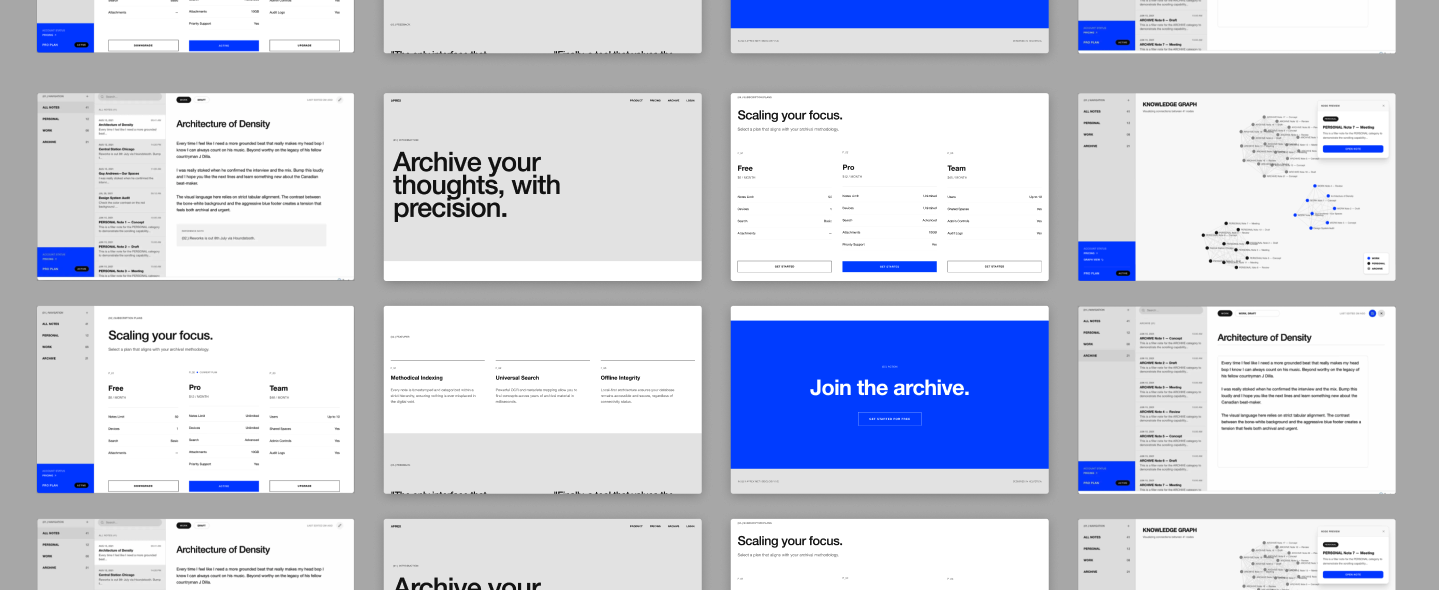
for aprex, a precision productivity tool, the outcome was fluidity. we built a react spa with a custom d3.js knowledge graph, a cmd+k command palette from scratch, and a local-first data architecture. 50+ screens, fully branded. the outcome was a user feeling in control of complex information.
for an ae content pipeline we built for a us family office, the outcome was automation. a pipeline with ahrefs integration and youtube transcript distillation, running on a cron job, writing and deploying seo content without human input. built in 7 days for $10,000+. the outcome was a fully autonomous system.
this is the gap a toolkit cannot cross. the gap between functionality and a strategic asset.
the trust equation: how we prove build quality before you commit
i know the fear. you’ve been burned before. the last thing you want is another vague promise.
so we prove it backwards.
we offer a blueprint for $1,500. it’s a one-time fee to map your entire product. you walk away with a comprehensive document you could hand to any other team. you see our thinking, our architecture, our understanding of your problem. you only proceed to the build if the blueprint gives you confidence.
or, you look at the case studies. the 48-hour fintech mvp. the 7-week mosaic app with coppa compliance. the $3,500 cleanup of a 400-file, ai-generated codebase where we found 4 hardcoded api keys and 5 hallucinated npm packages.
trust is built on specific evidence, not generic claims.
This is for you if:
- You have a product to ship and a timeline that matters (e.g., a YC interview in 8 weeks).
- You’ve been ghosted by a freelancer or burnt by a boilerplate.
- You need premium, predictable execution and can’t afford local agency variance.
This isn’t for you if:
- You’re still ideating and haven’t settled on the one painful problem you’re solving.
- You’re a large enterprise with established dev teams and quarterly procurement cycles.
- You need a fixed-price for an undefined, constantly changing project scope.
if you’re that founder, and you’re ready to move from being stuck to being live, let’s talk. tell us about your build. we’ll tell you if we can help, and exactly how.